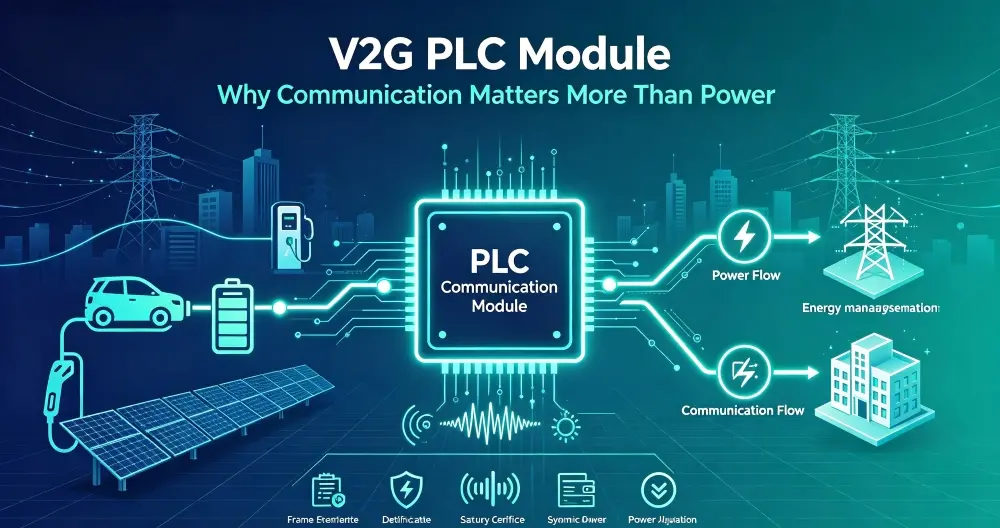
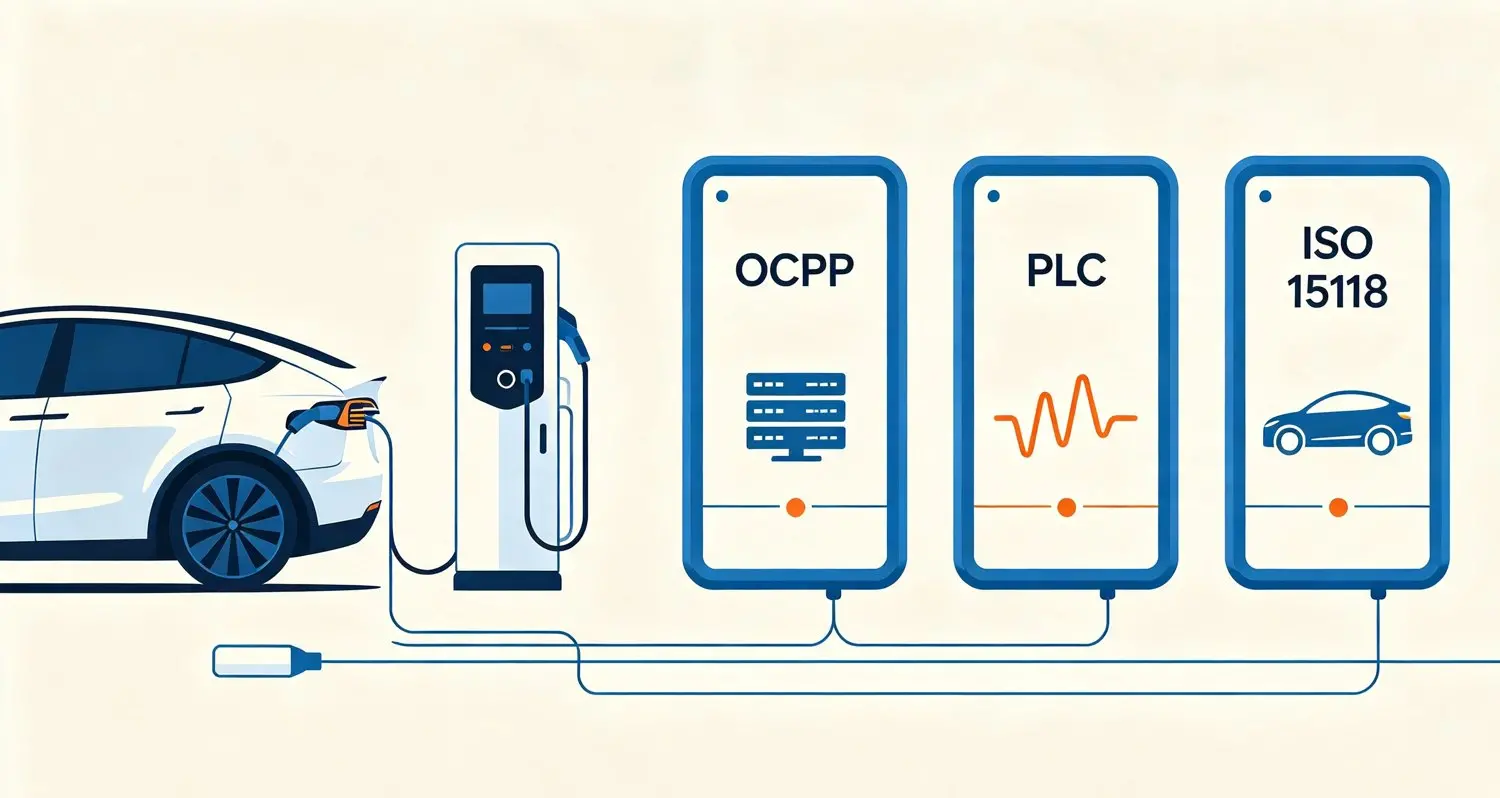
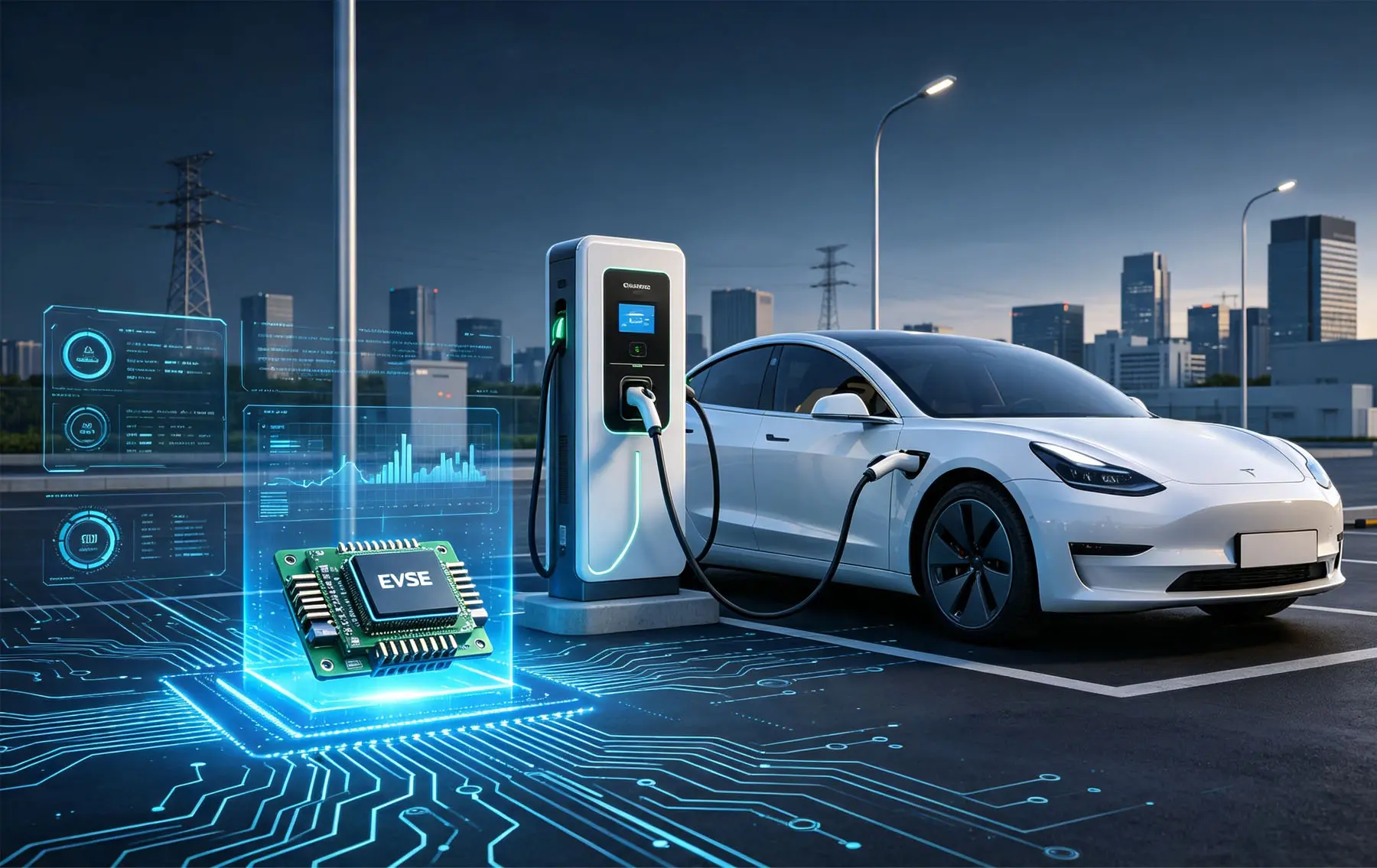
ISO 15118 is the core international standard for intelligent and secure communication between electric vehicles (EVs) and electric vehicle supply equipment (EVSE/SECC). Its standardized message flow governs the entire lifecycle of EV charging sessions, laying a critical technical foundation for Plug&Charge authentication, smart power management, and Vehicle-to-Grid (V2G) bidirectional energy interaction. Different from traditional analog-based charging modes, ISO 15118 adopts IPv6 network transmission, TLS end-to-end encryption, and EXI binary message encoding, delivering high efficiency, security, and cross-device interoperability for global smart charging infrastructures.
1. Pre-Session Link Initialization
Before formal message interaction, physical and network layer pre-configuration is completed to build a stable transmission channel. After the EV plugs into the charging gun, basic electrical detection is executed to check circuit safety and contactor status. Meanwhile, network discovery, SLAC link matching, and IPv6 address negotiation are finished between EV and SECC. This stage eliminates underlying connection obstacles and prepares for subsequent standardized business message interaction.
2. Protocol Negotiation and Security Handshake
This core preliminary stage confirms unified communication rules for both parties. EV and SECC exchange protocol version information to match compatible ISO 15118 sub-standard specifications. Afterwards, a complete TLS security handshake is conducted to establish an encrypted transmission tunnel. All follow-up interactive messages are encapsulated and encrypted, effectively preventing data tampering, eavesdropping and network attack risks.
3. Identity Authorization and Authentication
As the core guarantee of secure charging, this stage realizes automatic user and device verification. Relying on digital certificate mechanisms, EV sends identity credential messages to SECC for authentication and authorization. The whole process supports contactless Plug&Charge functionality, replacing traditional manual scanning or card swiping authentication. It achieves one-click automatic verification while ensuring the legality of charging equipment and user identity.
4. Charging Parameter Discovery and Negotiation
Both parties interact to confirm adaptive charging parameters to match vehicle battery status and grid load conditions. The EV feeds back real-time battery data, maximum acceptable power, and charging demand, while SECC uploads grid power supply capacity and operational constraints. Through multiple rounds of request-response message interaction, the two sides confirm the optimal charging strategy to realize flexible and intelligent power matching.
5. Real-Time Power Delivery and Dynamic Adjustment
During formal charging, continuous cyclic message interaction is maintained. EV and SECC regularly exchange operating status, power data and fault information. When battery status or grid load fluctuates, the system dynamically adjusts charging power via real-time message updates, ensuring safe, stable and energy-efficient charging. This stage also supports V2G reverse power transmission scenarios.
6. Session Termination and Status Reset
After charging completion or active termination requests, both parties execute standardized session closing procedures. They exchange stop notification messages, confirm power-off safety status, and clear temporary connection data and negotiation parameters. The entire communication session is gracefully closed, and the equipment resets to the initial state to prepare for the next charging connection.