

EPBD Directive Mandates Charging Readiness in All New Buildings
May 08, 2025
More News


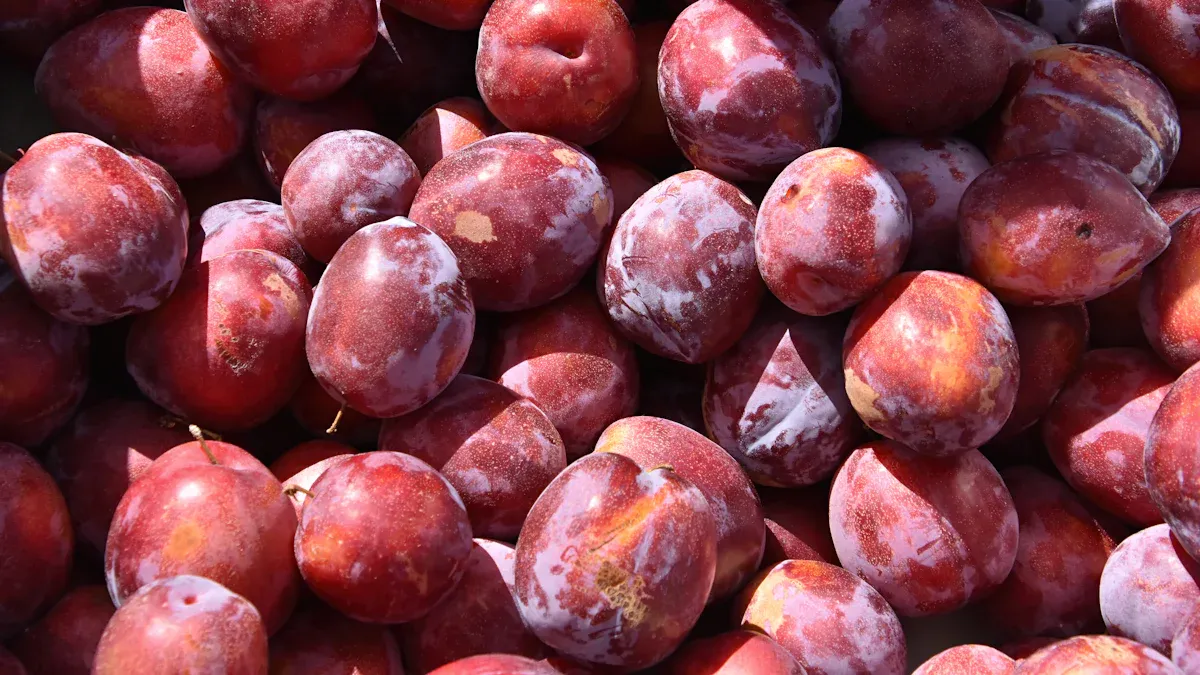
Image Source: pexels
You can boost your wellness by adding fresh prune to your daily meals. This fruit supports healthy digestion and gives your body powerful antioxidants. Recent studies show that eating a few prunes each day helps keep your bones strong and slows down bone loss, especially in women after menopause. You will find that fresh prunes fit easily into snacks, salads, or baked dishes. Try them for a simple way to support your health.
Eating fresh prunes daily supports digestion by improving stool frequency and consistency. Aim for 50 to 100 grams for best results.
Fresh prunes are rich in antioxidants, which help protect your cells from damage and lower inflammation, promoting overall health.
Regular consumption of fresh prunes can strengthen bones, especially in postmenopausal women, by providing essential nutrients like vitamin K and potassium.
Including fresh prunes in your diet can improve heart health by raising good cholesterol levels and reducing inflammation.
Prunes have a low glycemic index, making them a smart snack choice for blood sugar management. Limit servings to 2-3 prunes if you have diabetes.
You can support your digestive system by eating fresh prune. This fruit contains both soluble and insoluble fiber. Soluble fiber helps soften your stool, while insoluble fiber adds bulk and moves waste through your gut. Many people use prunes to relieve constipation. Studies show that prunes work better than psyllium, a common fiber supplement, for improving stool frequency and consistency. If you eat about 50 to 100 grams of prunes each day, you may notice a positive change in your gut health. Prunes also help grow good bacteria in your gut, which keeps your digestive system balanced.
Study Focus | Findings | Comparison |
|---|---|---|
Effectiveness of prunes vs. psyllium | Prunes improved stool frequency and consistency | Prunes outperformed psyllium in constipation |
Impact on gut microbiome | 50g of prunes daily enriched beneficial bacteria | Positive shift in gut microbiome composition |
Systematic review of RCTs | 100g of prunes daily improved stool frequency and consistency in constipated subjects | Prunes showed better results than psyllium |
Tip: Start with a small serving, such as 2-3 prunes, and increase slowly to avoid stomach discomfort.
You can protect your cells from damage by adding fresh prune to your meals. Prunes contain many antioxidants, including phenolic compounds. These antioxidants fight free radicals, which can harm your cells and lead to chronic diseases. Eating prunes may help lower inflammation in your body. Lower inflammation means less risk for heart disease and other health problems. You can enjoy prunes as a snack or mix them into yogurt for an easy antioxidant boost.
You can keep your bones strong by eating fresh prune. Prunes contain nutrients that support bone health, such as vitamin K, boron, potassium, and phenolic compounds. Vitamin K helps your body build and maintain strong bones. Boron and potassium help your body use calcium better. A study with postmenopausal women showed that eating prunes every day helped preserve bone mineral density in the hips. This means prunes may help prevent bone loss as you age.
Nutrient | Amount per 100g | Contribution to Bone Strength |
|---|---|---|
Vitamin K | 79% of daily value | Activates osteocalcin, essential for bone mineralization. |
Boron | 2-3 mg | Enhances calcium metabolism and bone microarchitecture. |
Potassium | 745 mg | Neutralizes acid load, reduces calcium loss in urine. |
Phenolic Compounds | 184 mg | May aid in bone health and prevent chronic diseases. |
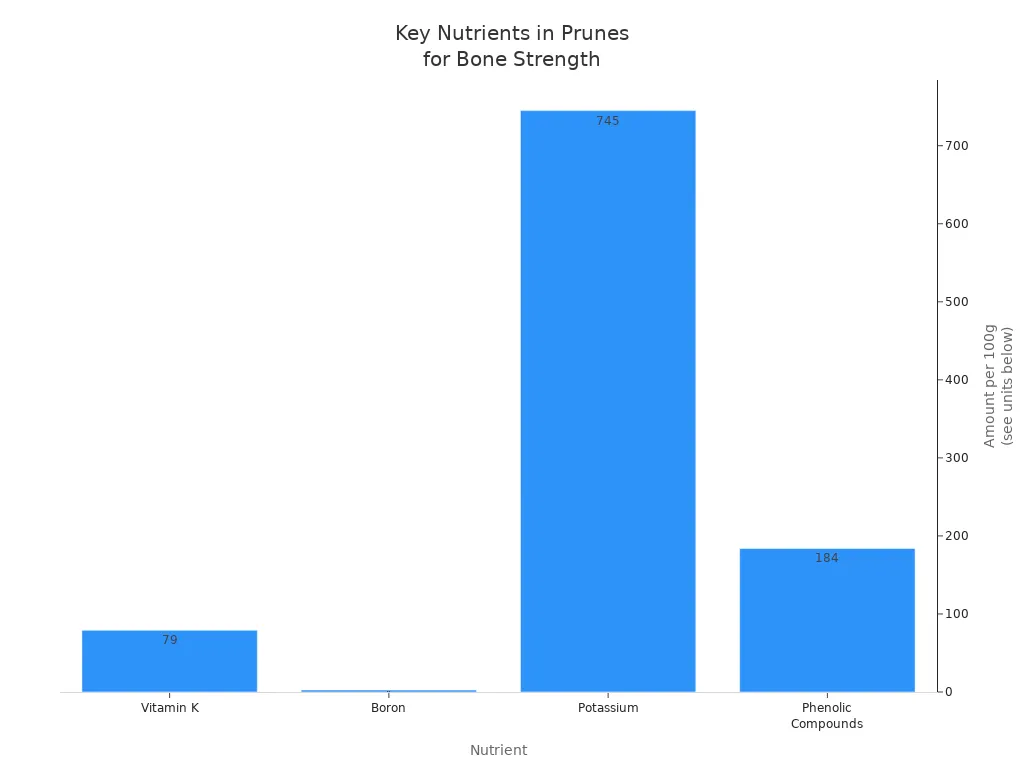
Note: Eating 50 to 100 grams of prunes daily can help support bone health, especially for women after menopause.
You can care for your heart by including fresh prune in your diet. Prunes help raise HDL, which is the "good" cholesterol. They also lower the total cholesterol to HDL ratio, which is good for your heart. Prunes increase antioxidant capacity and reduce inflammation, both important for heart health. Some studies show that prunes may not change LDL cholesterol, but they still offer benefits for your heart.
Finding | Description |
|---|---|
Improved HDL | Daily consumption of 50 grams of prunes raised HDL ('good' cholesterol). |
Lower Cholesterol Ratio | Reduced total cholesterol to HDL ratio was observed. |
Antioxidant Capacity | Increased antioxidant capacity was noted. |
Reduced Inflammation | Lower levels of inflammatory cytokines associated with CVD risk. |
You can improve your heart health by eating prunes every day. Many experts suggest 50 grams, or about 5-6 prunes, as a healthy serving.
Postmenopausal women who included prunes in their diet showed lower total cholesterol levels.
Eating prunes may reduce oxidative stress and inflammation, which are risk factors for heart disease.
You can help balance your blood sugar by choosing fresh prune as a snack. Prunes have a low glycemic index, so they do not cause a big spike in blood sugar. The fiber in prunes slows down sugar absorption. If you have diabetes, you should watch your portion size. Nutritionists recommend eating 2-3 prunes per serving to avoid raising your blood sugar too much. You can also drink prune juice, but keep it to about 4 ounces at a time.
Prunes can be consumed at any time, but portion sizes should be monitored to prevent blood sugar spikes.
It is recommended to limit prunes to about 2-3 per serving for individuals with diabetes.
Prune juice can be consumed in moderation, ideally in small portions (about 4 ounces) to manage sugar intake.
Tip: Pair prunes with nuts or yogurt for a snack that keeps your blood sugar steady.
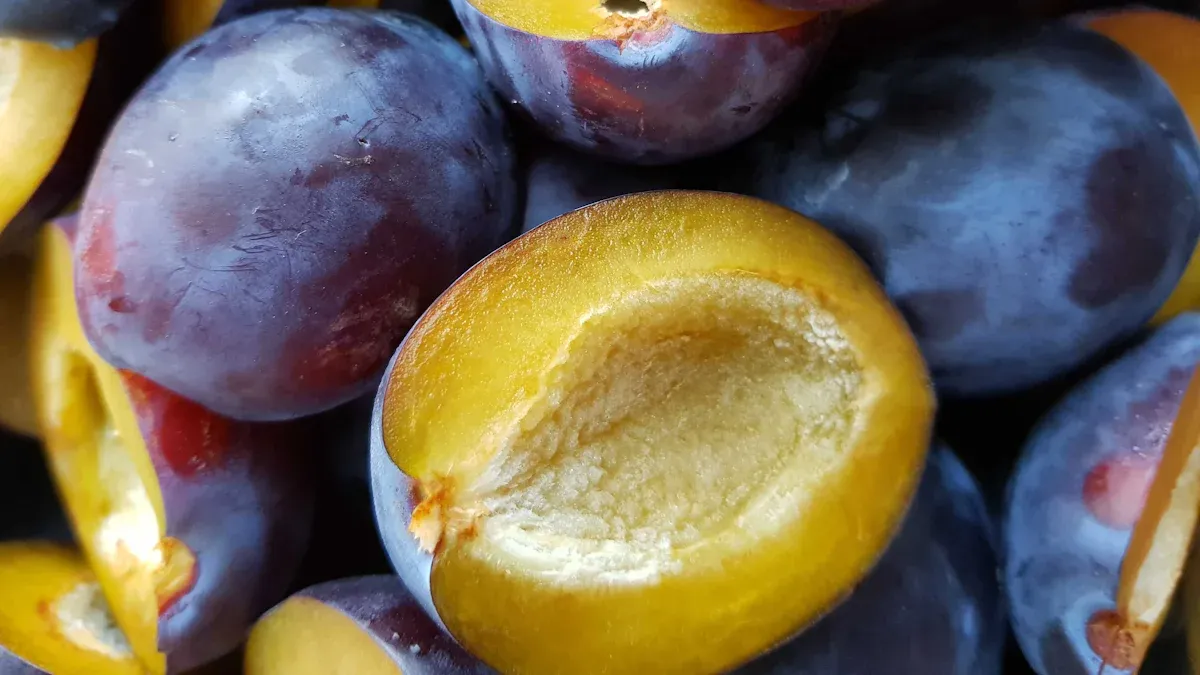
You get a powerful mix of vitamins and minerals when you eat fresh prune. This fruit stands out for its high vitamin K content, which helps your body use calcium and supports strong bones. Fresh prune also gives you potassium, magnesium, calcium, and vitamin A. These nutrients help your muscles, nerves, and immune system work well. The table below shows the main nutrients you find in 100 grams of fresh prune:
Nutrient | Quantity per 100 g |
|---|---|
Calories | 240 |
Protein | 2.18 g |
Calcium | 43 mg |
Iron | 0.93 mg |
Magnesium | 41 mg |
Potassium | 732 mg |
Vitamin A | 781 IU |
Vitamin K | 59.5 mcg |
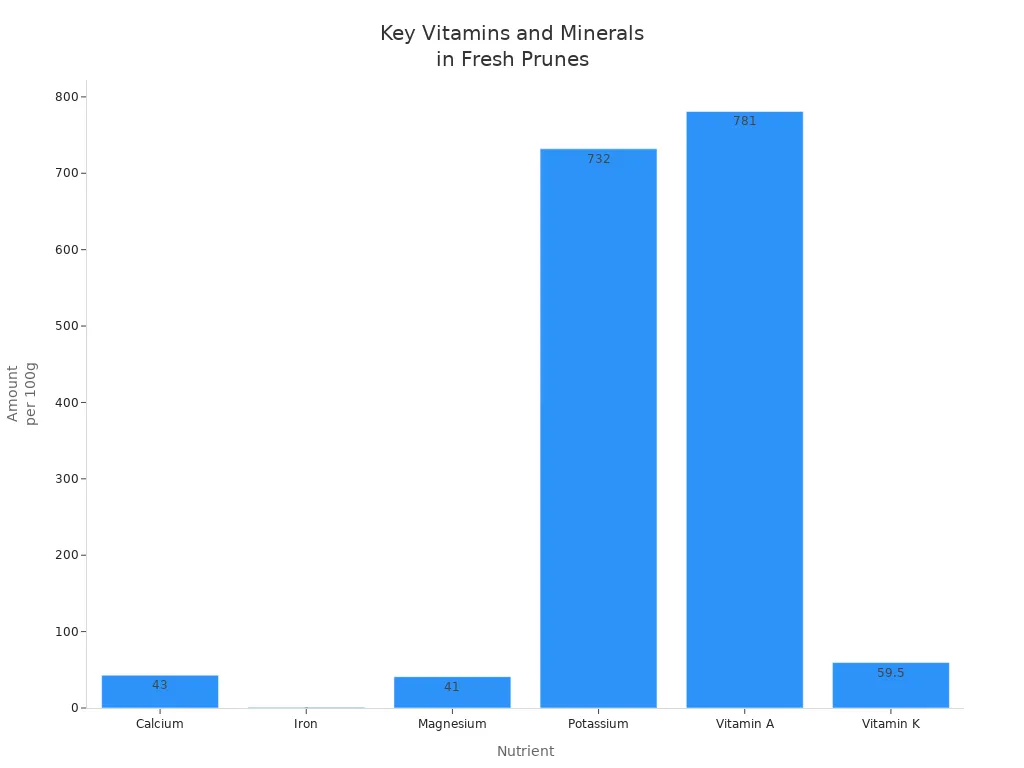
Fresh prune contains more vitamin K than many other fruits you eat for bone health. This extra vitamin K helps your body keep your bones strong as you grow.
You support your digestive system every time you eat fresh prune. This fruit contains both soluble and insoluble fiber. Each type of fiber helps your gut in a different way:
Soluble fiber slows digestion and keeps your blood sugar steady. It also acts as a prebiotic, feeding the good bacteria in your gut.
Insoluble fiber adds bulk to your stool and helps you stay regular. It acts like a natural scrub brush for your colon.
Tip: Eating fiber from both types helps prevent constipation and keeps your gut healthy.
You can enjoy fresh prune as a snack without worrying about too many calories. One serving (about 100 grams) gives you around 240 calories. You also get a good amount of nutrients for each calorie you eat. This makes fresh prune a smart choice if you want a sweet treat that also supports your health.

You can enjoy fresh prune as a simple snack. Many people like to eat prunes alone or add them to breakfast oatmeal. You can mix prunes with nuts, dried fruits, or chocolate chips for a quick trail mix. Prunes taste sweet and chewy, so you do not need to add sugar. Try slicing prunes and tossing them into salads or yogurt bowls. You get fiber, vitamins, and minerals with every bite.
Eat prunes alone as a snack.
Add prunes to oatmeal or yogurt.
Mix prunes with nuts and dried fruit for trail mix.
Slice prunes for salads.
Tip: Eating prunes in the morning helps you feel full and gives you energy for the day.
You can use prunes in many cooked dishes. Prunes add flavor to desserts, meats, and veggies. You can stuff prunes in European pastries or add them to compotes. Cooking prunes with chocolate makes a rich treat. Prunes work well in baked goods like muffins, breads, and cakes. You can also add prunes to savory stews for a sweet twist.
Use prunes in desserts and pastries.
Add prunes to meat dishes and stews.
Bake prunes into muffins or breads.
Cook prunes with chocolate for a special dessert.
You can blend prunes into smoothies for extra nutrition. Prunes give smoothies a natural sweetness and creamy texture. You can puree prunes to make prune butter or jam. Prunes support gut health, bone strength, and heart wellness. The table below shows some benefits of adding prunes to smoothies and snacks:
Benefit | Description |
|---|---|
Gut Health | Prunes increase helpful bacteria in your digestive system. |
Bone Health | Prunes improve bone formation and prevent bone loss. |
Weight Management | Prunes help you feel full and do not spike blood sugar. |
Heart Health | Prunes may lower blood pressure and cholesterol levels. |
Try blending prunes with bananas and yogurt for a quick smoothie.
You can keep prunes fresh by storing them in airtight containers in a cool, dark, and dry place. For longer storage, use refrigeration or vacuum-sealing. Freezing prunes works well if you select ripe, firm fruit. Avoid prunes that show signs of decay or mold. You can use ascorbic acid to prevent darkening when freezing or drying prunes. Packing prunes in sugar or syrup helps maintain their quality during freezing.
Note: Proper storage keeps prunes tasty and helps preserve their vitamins and minerals.
You can add fresh prunes to many recipes. Nutrition experts suggest several easy ways to use prunes in your meals:
Sweeten smoothies: Blend prunes with bananas and yogurt for a creamy, sweet drink.
Elevate appetizers: Stuff prunes with soft cheese and nuts for a tasty snack.
Lighten up dressings & sauces: Puree prunes and mix them into salad dressings or barbecue sauce to cut down on added sugar.
Spice up sides: Chop prunes and toss them into salads or stews for extra flavor.
Better-for-you sweet treats: Use prunes in muffins or breads to replace some sugar or fat.
"Prunes are an easy snack to eat when on-the-go, as these fruits are perfectly portable and don’t require refrigeration. Including prunes in dishes like baked chicken or oatmeal can be fun ways to reap these health benefits too." — Lauren Manaker
You can serve prunes in many creative ways. Try these ideas to make your meals more exciting:
Add prunes to smoothies for natural sweetness and a lower glycemic index.
Mix prunes into chicken dishes for a sweet and savory flavor.
Pair prunes with bitter greens, nuts, and tangy cheese in salads.
Enjoy prunes alone as a snack or with yogurt for breakfast.
You can choose the best prunes by looking for these qualities:
Criteria | What to Look For |
|---|---|
Ripeness | Prunes should feel soft but firm |
Size | Larger prunes often taste sweeter |
Weight | Heavier prunes have more juice |
Color | Deep purple or blue-black color |
Absence of damage | No bruises or mold |
You can store fresh prunes in the refrigerator for up to six months. Prunes keep their nutrients and taste when you store them in a cool, dry place. Always use airtight containers to keep prunes fresh longer.
Tip: Check prunes often and remove any that show signs of spoilage.
You can boost your health by adding fresh prunes to your meals. Prunes support digestion, bone strength, and heart wellness. Try these simple ways to enjoy them:
Keep a small bag for a quick snack.
Slice prunes into oatmeal or yogurt.
Puree prunes for baking.
Add prunes to salads or sauces.
Mix prunes with nuts for trail mix.
Some people face high prices or limited access to fresh prunes. Community programs can help make healthy foods like prunes easier to find.
You can eat 2 to 6 fresh prunes daily. Start with a small amount. This helps your body adjust to the fiber. Increase slowly if you want more benefits.
Yes, you can eat fresh prune in small servings. The fiber helps slow sugar absorption. Always check your blood sugar after eating new foods.
Fresh prunes have more water and fewer calories per serving. Dried prunes offer more fiber and nutrients in a smaller size. You can choose either based on your taste and needs.
You should keep fresh prunes in the refrigerator. Use an airtight container. This keeps them juicy and safe to eat for up to one week.